


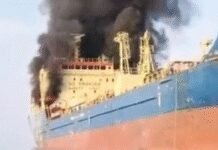





NEW DELHI: Brent crude jumped 10% to about $80 a barrel in over-the-counter trade Sunday, reflecting growing anxiety over potential supply disruptions through the Strait of Hormuz, a critical energy chokepoint for India and much of Asia. Amid the supply fears, OPEC producers met Sunday and decided to increase crude output in a phased manner to prevent excessive price spikes that could hurt global demand.

The key eight producers – Saudi Arabia, Russia, Iraq, the UAE, Kuwait, Kazakhstan, Algeria and Oman – met virtually to review market conditions and decided to cautiously begin restoring some of the crude output they had voluntarily cut in 2023 to support prices. Starting April 2026, the group will collectively increase production by about 206,000 barrels a day, the first step towards gradually bringing back the 1.65 million barrels a day previously withheld from the market.Traders fear that prices may rise to as much as $100 a barrel, if flows remain affected. A persistent increase in crude prices will force Indian refiners to reduce their margins or raise pump prices with govt too having to give up on some of the revenue that it has been raking in.While govt and oil companies have maintained that there is sufficient stock in the country, reports said that Iran has been relaying messages, warning ships that they will not be allowed to pass. Tanker traffic has slowed or been suspended as carriers avoid the region amid safety concerns.Refiners and govt officials said adequate buffers are in place and that they are closely monitoring the evolving situation. Officials indicated that Indian refiners currently hold crude inventories equivalent to roughly 10-15 days of consumption, while fuel stocks are estimated to cover another five-seven days of national requirement. The total strategic petroleum reserves, including stocks in caverns and those held by refiners, amount to nearly 74 days of cover.“Only a sustained blockage would lead to concern. The present assessment does not point to immediate physical shortages, but we are closely monitoring how the situation is unfolding,” said a senior govt official.Japanese shipping companies have halted movements through the strait due to safety concerns. Agencies reported that war-risk insurance premiums for vessels in the Gulf spiked by nearly 50%, making tanker operations significantly more expensive. Insurers also told ship owners on Saturday that they would cancel existing policies and raise coverage prices for vessels travelling through the Gulf and Hormuz.A govt official said that as per recent vessel-tracking trends, tanker traffic movement has turned cautious, with some vessels slowing transit or waiting outside the Gulf amid heightened security risks.


