







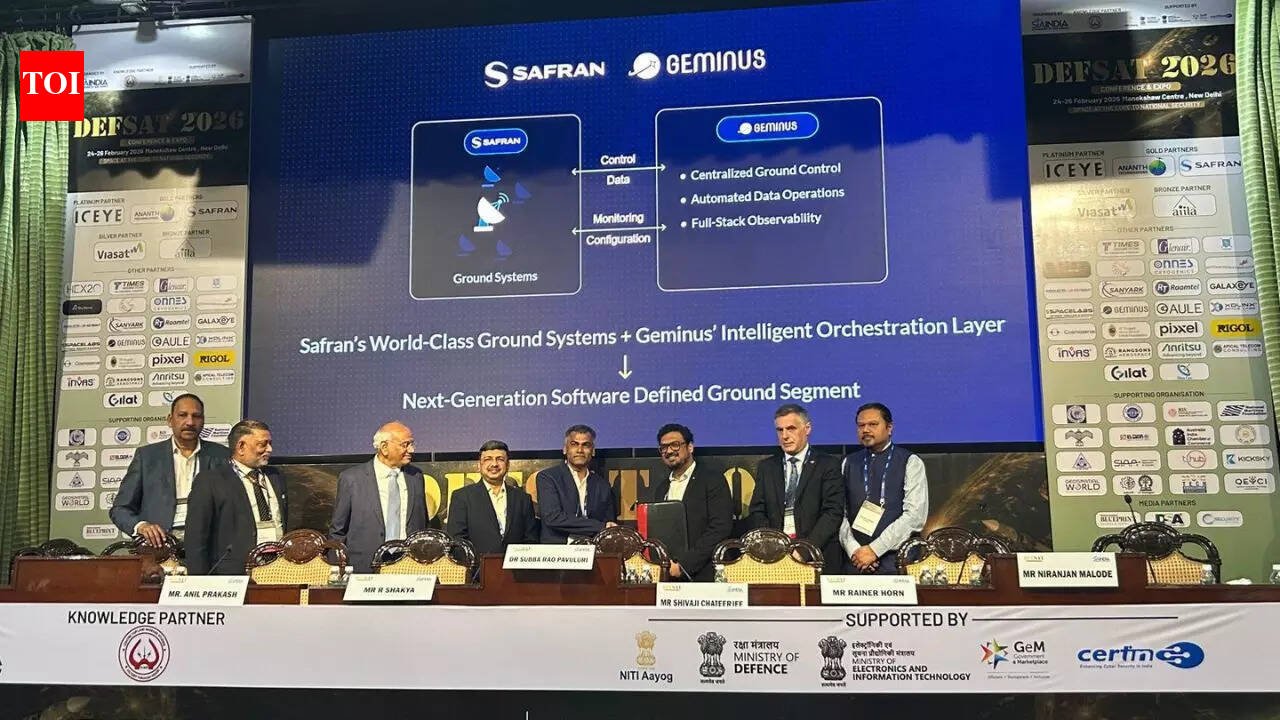

NEW DELHI: Defence and military experts, on Day 2 of DefSat2026 conference in New Delhi on Wednesday, intensified the strategic dialogue on building India’s persistent and resilient defence space capability, against the backdrop of rapid global transformation in space-based military infrastructure. With 1,602 space-based ISR satellites projected to launch globally between 2025 and 2030, the sector is entering a phase of operational maturity, shifting from sporadic expansion to predictable, proliferated constellations designed for continuous coverage, rapid revisit, and real-time analytics. The discussions at the conference underscored that persistent space capability is no longer aspirational but foundational to national security.Setting the tone for the day of the conference at Manekshaw Centre, Subba Rao Pavuluri, president, SIA-India, said: “India stands at a decisive inflection point. Scale without coordination is aspiration; scale with alignment becomes capability. As we advance toward Aatmanirbharta and aspire to emerge as a Vishwaguru in the space domain, unity of purpose across govt, industry, and the armed forces will determine our strategic success.”Day 2 of the conference also witnessed tangible B2B activity, signalling growing confidence among private players in the defence space ecosystem. There were six MoU exchanges, involving Safran and Geminus Space; TakeMe2Space and Little Place Labs; and RedBalloon Aerospace with EON Space, Sanyark, Raudrane, and Andurax.The purpose of the MoU between Safran and Geminus Space is to solve the challenges associated with large-scale operations of ground systems through integration of Safran Data Systems’ ground equipment systems like antennas, communication modems and signal processing units with Geminus unified ground operations platform.Maj Gen Neeraj Shukla, AVSM, SM, officiating director general (Strategic) Planning, Indian Army, emphasised India’s responsible and civilisational approach to space: “We are a responsible nation. Our approach to space must reflect our civilisational ethos — ‘Doham Karma Sansadhanam Na Kadapi Shoshanam, Lok Hite Bhutanam Sarakshanam Pratham’ — meaning responsible utilisation of resources, never exploitation, for the welfare and protection of all beings. Space is not merely for defence dominance, but for sustaining the very civilisation we are sworn to protect.”He further said that national security can no longer be viewed solely through a military lens but reflects the collective strength of diplomacy, information, military capability, economic resilience, political leadership, and indigenous technology. As AI, quantum technologies, cyber capabilities and


