







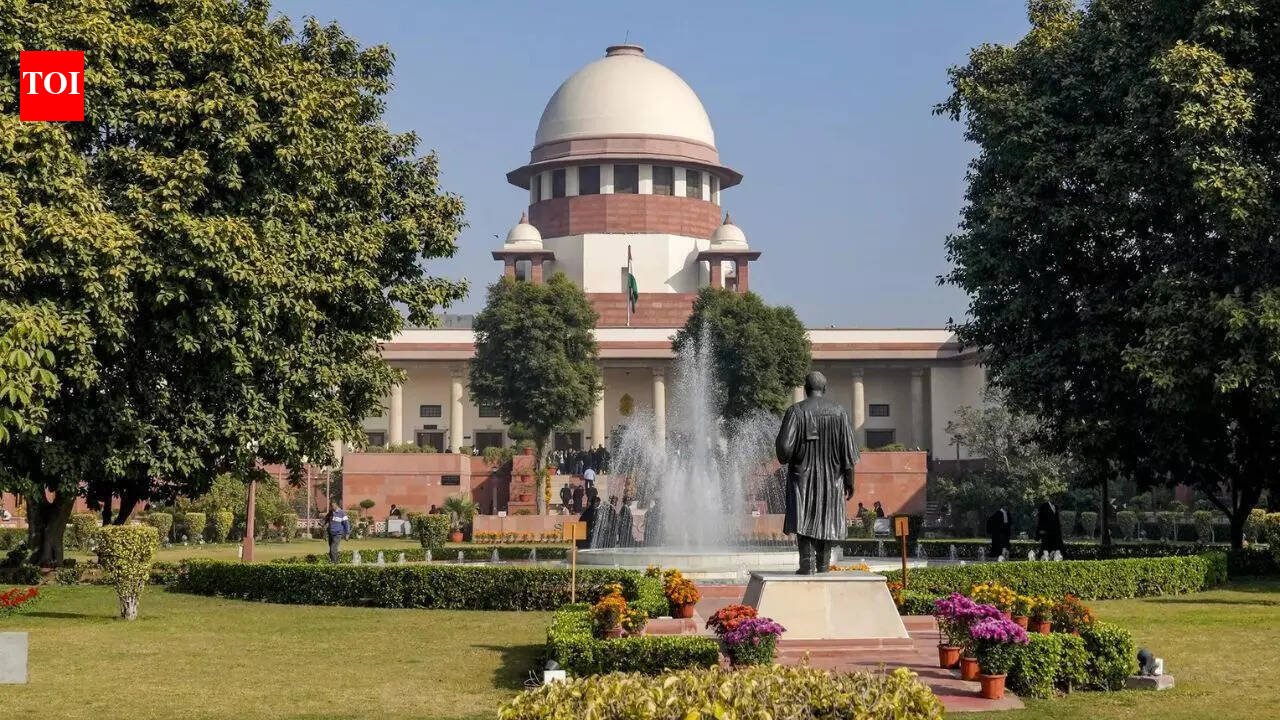

NEW DELHI: Criticising the practice of litigants, particularly government authorities, of not complying with court orders and filing appeals or review pleas when faced with contempt proceedings, the Supreme Court has said the court should deal with them harshly, otherwise public faith in the judiciary would erode.A bench of Justices Ahsanuddin Amanullah and R Mahadevan also held that the defence of administrative hurdles, or even impossibility to perform what has been ordered, cannot be invoked in contempt proceedings if a contemner has failed to brief the court the difficulty in implementation of its order within the prescribed time limit. “Delayed filing of appeals should be the exception. But in recent times, the exception has practically evolved to become the rule. Orders passed by courts are not complied with for a long time, and when contempt petitions are filed, belated appeals, with tremendous delay, are preferred,” it said.SC: Disobedient litigants may face criminal contemptIt said, “We, in no uncertain terms, deprecate these practices. It is felt that by such modus operandi, disobedient litigants act brazenly which has the further effect of bringing down the authority and majesty of courts and the rule of law, interfering in the administration of justice. The same may well, in certain situations, border on criminal contempt.”High courts should deal with such “unscrupulous litigants, more so when they happen to be ‘State’, within the meaning of Article 12 of the Constitution, or like bodies, with an iron hand”, the SC said, adding, “Unless HCs, so also this court, deal with these aspects firmly, we run the clear risk of erosion of the unflinching faith that the ordinary litigants of this country repose in the judiciary at all levels. It is the solemn duty of all of us manning courts across the hierarchy to ensure that the public faith never wavers.”The bench said justice is tempered with mercy but courts should take strong exception to dishonest litigants, and it needs to be examined whether the ‘liberal’ jurisprudence on contempt requires a serious re-look. It also made it clear that contempt proceedings would not be confined only to parties before the court for non-implementation of order, but third parties/non-parties, who are part of the chain in decision-making process, would also be liable for contempt.“Simply put, thus, it is no longer res integra that a party, once becomes or is made aware of an order of this court, if yet acts in wilful default or deliberate non-compliance or any such like conduct against/in breach of the order concerned, makes itself liable to face the full wrath of contempt jurisdiction,” it said.The court passed the order on a contempt petition against Chhattisgarh government officials for not complying with its order on regularising the services of employees, and granted last chance to them to implement it within 15 days.


